More than a tour, it’s a journey through culture, resilience and the powerful stories that shaped Chicago’s Black communities.
175 N. State St.
Daily
Per Person
We tour real Chicago neighborhoods most visitors never get to see.
Most tours run with five guests or fewer, a neighborhood tour, not a bus.
A picture-taking tour, capture murals, homes and landmarks up close.
A chronological story told from the Civil War to the present day.
Years of History
Landmarks Visited
Hours of Discovery
Guest Experience
A small group is not a lesser tour. It is a nearer one. The vehicle stops where a coach cannot. The guide lowers their voice and you lean in. A question asked on a sidewalk is answered on that same sidewalk, at the exact spot it happened.
Larger groups are welcome, and we host them. But this tour was built the other way round, a personal neighborhood tour, with room to look, to ask, and to be answered.
Of our tours run with five guests or fewer
The year, the address, the name behind the plaque and the argument behind the mural, the parts a coach never gets to.
Time at every stop to take the shot you came for, from the angle you want, until it's right.
Room to ask, to pause, to stand in front of a stranger's doorway and let it land.
9:30 AM
Check in under the iconic marquee on State Street and meet your guide.
10:00 AM
How millions moved north and built the Black Metropolis on the South Side.
11:00 AM
Murals, monuments, churches and the homes of legends who shaped America.
12:00 PM
From Emmett Till to Harold Washington, the movement that changed a nation.
1:00 PM
Arrive at Jackson Park for a 45-minute visit, time to explore the museum, library branch and grounds before the 1:30 PM experience.
This is more than a sightseeing tour, it’s a history lesson on wheels. We present a chronological story beginning at the end of the Civil War and continuing through the Great Migration, the Civil Rights Movement, and the modern era.
We believe that to understand Black Chicago, you must first understand Chicago itself. Learn how the city became one of the most important centers of Black culture, business, politics, education and activism in America.
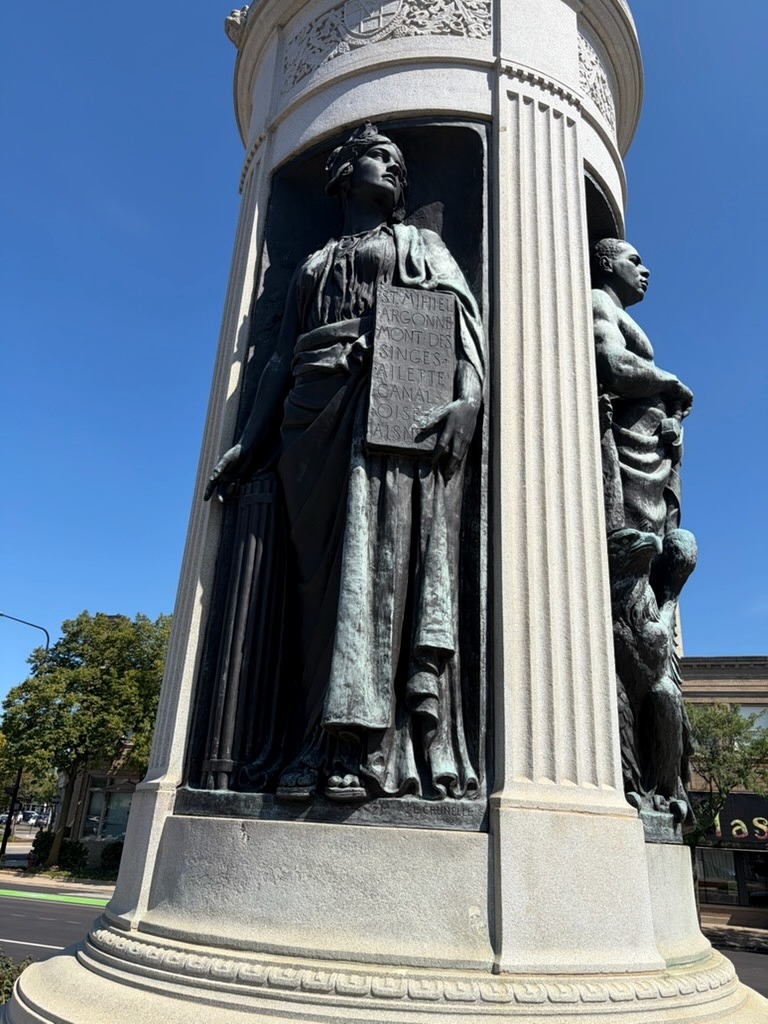
Victory Monument
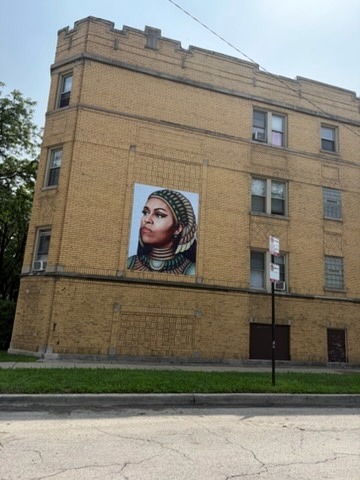
Michelle Obama Mural
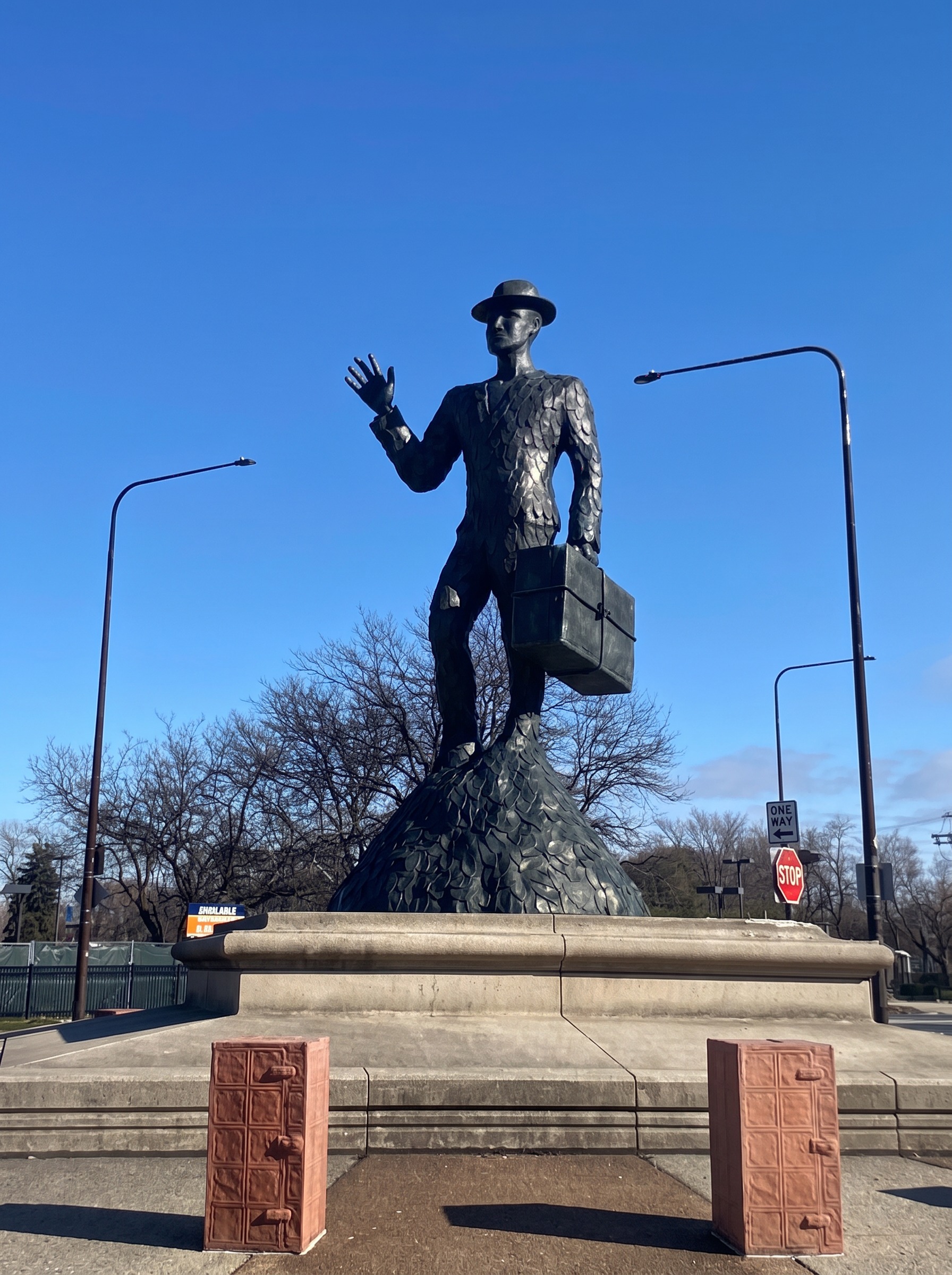
Great Northern Migration
Every stop has a voice. These are the places where Chicago’s Black history still stands, waiting to tell you what happened here.
A raised hand. A suitcase. A future still unwritten. Alison Saar’s north-facing traveler honors African Americans who left the South in search of freedom and opportunity. At the gateway to Bronzeville, the figure evokes the hope of the Great Migration and the communities that made Chicago their home.
Before the towers rose, a trading household took root beside the river. Jean-Baptiste Pointe DuSable, a Black pioneer widely recognized as Chicago’s first permanent non-Indigenous settler, built that household with his Potawatomi wife, Kitihawa. His memorial bust recalls their place in a city whose story also reaches back through generations of Indigenous life.
2120 S. Michigan Avenue, a landmark recoading home for Chicago blues and rock,1957 to 1967.
A mural honoring railway workers whose organizing advanced Black labor rights.
The industrialist behind the company town, depicted in a viaduct mural.
A painted tribute to Barack Obama and the South Side's place in his story.
South Shore, installed by Chris Devins in 2017, based on artwork by Gelila Mesfin.
Stand on the same sidewalks they walked. These are the real homes behind the famous names.
Purchased in 2005, this Kenwood residence connects Barack and Michelle Obama's story to Chicago's South Side. A family home before the White House, a lasting chapter in their chicago roots.
The former home of Ida B. Wells-Barnett, the journalist and civil rights leader who challenged lynching with fearless reporting. A private residence today, its limestone façade holds a powerful place in Chicago's history.
The family home where Emmett lived before his murder in 1955. Mamie's insistence that the world witness what happened to her son helped galvanize the Civil Rights Movement.
The Queen of Gospel bought this home in 1956. Behind an ordinary neighborhood façade lived an extraordinary voice that carried faith, courage and the sound of a movement.
They served overseas while facing discrimination at home. The Victory Monument honors the African American Eighth Regiment of the Illinois National Guard, which served in France during World War I as the 370th U.S. Infantry. Leonard Crunelle’s bronze reliefs preserve that legacy; a bronze soldier was added atop the monument in 1936. These photographs show a relief and its battle inscriptions, details of a memorial to courage and sacrifice.
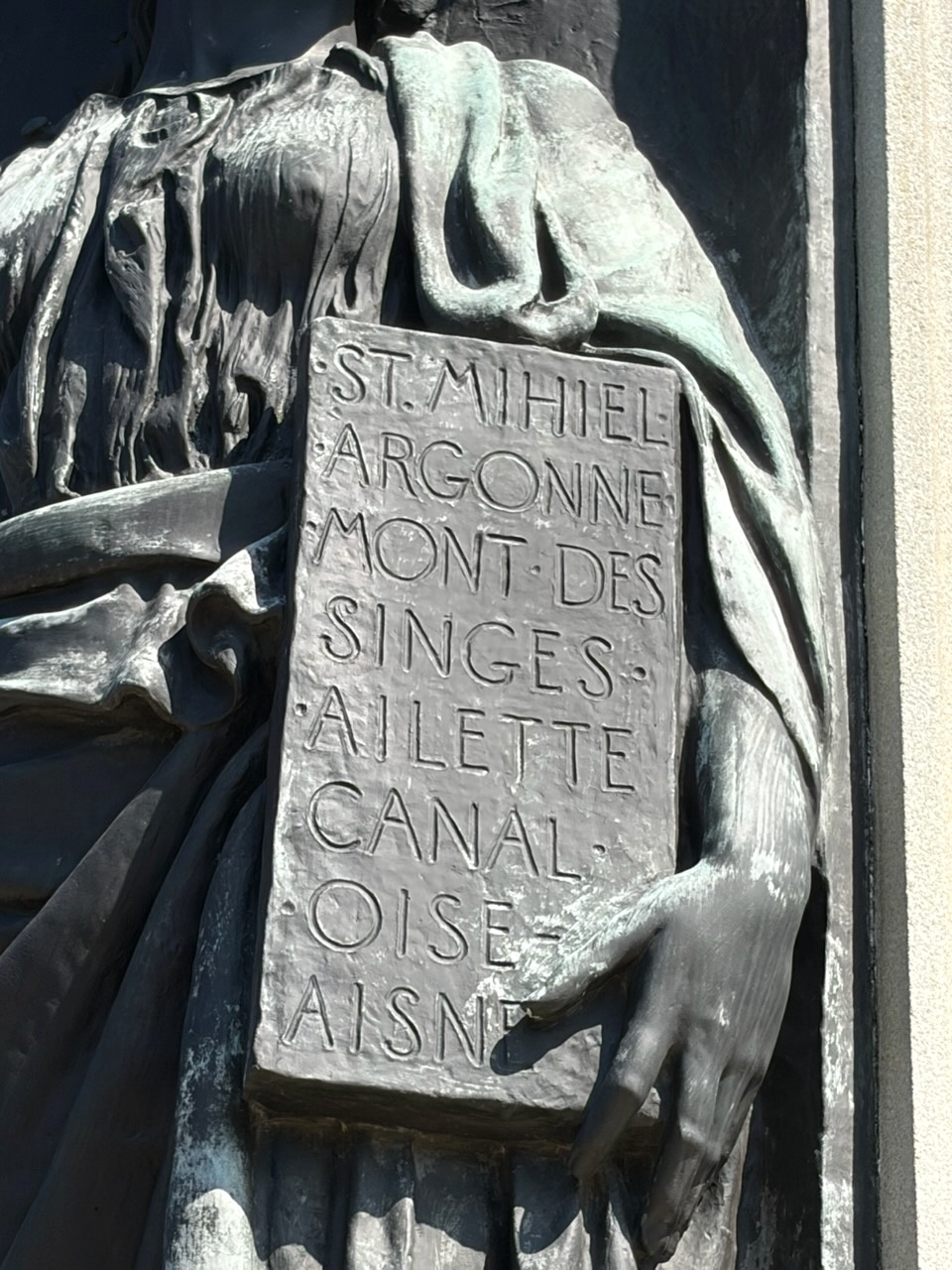
Bronzeville is rising again, and this time its revival is led largely by Black families. Middle and upper-middle-class Black residents are restoring the greystones and brownstones of the neighborhood their grandparents built, writing a new chapter on the same historic streets.
The Obama Presidential Center brings together a museum, a Chicago Public Library branch and public gathering spaces in Jackson Park. Often called the “Obama library,” the Chicago campus is distinct from the presidential records library managed by the National Archives.
The tour arrives at the Obama Presidential Center at approximately 1:00 PM for a 45-minute stop, all part of the tour, at no extra cost. Guests have ample time to explore the center and surrounding grounds. The scheduled Obama Center experience begins at 1:30 PM, with plenty of time to enjoy the exhibits and other attractions.
Chicago Personal Neighborhood Tour is a registered tour operator with the Obama Presidential Center.
Museum exterior · June 19, 2026 · Photo: AlphaBeta135 / Wikimedia Commons . CC0
Look down. Bronzeville’s sidewalk plaques honor Black figures who shaped music and community. Nearby memorials carry that legacy upward: portraits, words and sculpture honoring Ida B. Wells. Every name opens another chapter.
The Father of Gospel Music, honored in bronze.
A sidewalk tribute to the Queen of Gospel.
A portrait plaque honoring the journalist and anti-lynching activist.
The Ida B. Wells monument, by Richard Hunt, unveiled in 2021 on the former site of the housing development named for her.
From the Chicago Theatre marquee to the lakefront skyline, visitors leave with more than photos. They leave with stories.
Look down. Bronzeville’s sidewalk plaques honor Black figures who shaped music and community. Nearby memorials carry that legacy upward: portraits, words and sculpture honoring Ida B. Wells. Every name opens another chapter.
Michelle Obama Mural
Great Northern Migration
Victory Monument Relief
Presidential Center
The most meaningful tour I’ve ever taken. Our guide brought every street and every story to life.
Atlanta, GA
We saw a side of Chicago we never knew existed. Ending at the Obama Center was the perfect finale.
Houston, TX
Educational, inspiring and personal. I’d recommend it to every family visiting the city.
London, UK
Everything you need to plan your day with us. Still have questions? Give us a call, we’re happy to help.
All tours meet at the Chicago Theatre, 175 N. State Street, at 9:30 AM.
The tour runs 4 to 6 hours, including a 45-minute stop at the Obama Presidential Center, where the tour ends.
About 70% of our tours run with five guests or fewer. Larger groups are welcome and we accommodate them, but small groups are our focus, more detail, more time for pictures, a closer look at the city.
Call us at (773) 440-9800 to reserve your seats. Reservations are required.
Absolutely, schools, churches, families and private groups are all welcome.
Join us for an unforgettable experience. Unique, educational, inspiring, there are no other tours like this in Chicago.
Landmark and visitor photographs supplied by the tour organizer have been lightly color-corrected without inventing architectural details or rewriting inscriptions. The opening skyline video is illustrative promotional artwork, not documentary footage.
Obama Presidential Center museum: AlphaBeta135, June 19, 2026, CC0. Obama family home: DimiTalen, August 8, 2025, CC0, photograph source. Both photographs resized for the page.
Historical references: National Park Service · Wells-Barnett House · Field Museum · DuSable · Obama Foundation · Presidential Center · Chicago Landmarks · Victory Monument.